Drew Estate Cigars

The Drew Estate has been making cigars in Nicaragua since 1998. The company “family,” is composed of Jonathan Drew and Marvin Samel, who were fraternity brothers in university. In a 2010 profile in Cigar Aficionado described Drew as looking more like “a hipster artist or poet than a guy who makes his living overseeing the production of tens of millions of cigars per year.” The article described Samel as “eccentric in his own right. Although he eschews the über-casual look favored by Drew, he’s typically found in a suit jacket, shirt collar open wide, perhaps some French cuffs folded back to reveal a striking, over-the-top pattern, dark hair gelled and brushed back and up.”
But together they share a deep-seat passion for cigars. At their Nicaraguan headquarters of the La Gran Fabrica Drew Estate their 96,000 square foot factory, which opened in July 2007, is the largest cigar factory in Nicaragua, and one of the largest cigar factories on the globe. The factory makes in excess of 94,000 sticks a day.
The factory doesn’t look like a traditional cigar factory, built out of cinder blocks, instead it features South American architecture, huge, hand painted murals, so that every time you turn a corner you will see paintings inspired by both the Nicaraguan culture and the cigar culture.
They are leading what they like to call the “Rebirth of Cigars” and Jonathan Drew’s vision of a Cigar Subculture. They make cigars that are not made for purists, but for the nontraditional smoker, perhaps even the “young” smoker. The company maintains its own stable of artists: Drew Estate’s Subculture Studio.
They opened in the World Trade Center mall in New York City where their first order was for 30 boxes. In 1998 Jonathan Drew moved the farming operation to Esteli, Nicaragua, while the headquarters remained in NYC.
Considered “That Crazy Gringo” for wanting to make a quick buck in what was then a boom in cigars, Drew eventually earned the respect of the traditional cigar manufacturers because of his unrelenting work ethic where he demonstrated that he was just as ready to work hard as any of his hand rollers.
Their first cigar was the La Vieja Habana, and it was released in 1998—but it had to go into hiatus until 2001, due to the intervention of Hurricane Mitch. When it returned in was in an iconic Art Deco plus traditional Cuban form. But it was the “Acid” cigar that put the company on the map.
Enter the Acid
The “Acid” was named after the artist Scott “Acid” Chester and it was infused with the flavors of oils, botanicals, herbs and red wine. Chester was an emerging artist in the DUMBO art movement (which originated in the “Down Under the Manhattan Bridge Overpass” neighborhood of Brooklyn) whose artworks combined industrial, urban, graffiti and motorcycle. The cigars produced to honor him and his art included Atom Maduro, Cold Infusion and Extra Ordinary Larry. The Acid is Drew Estate’s best known brand—and its sells like crazy.
The sales of the “Acid” were given a boost in 2001 when Forbes magazine did a profile on “Cult Brands” that included Harley Davidson, Apple, Krispy Kreme, Screaming Eagle wines, Linux, and . . . Acid. The Forbes article quoted Jonathan Drew as saying, “The day I go mass market, I’m out of business.”
The next Drew Estate entry was the Natural, which was intended to be a contrast to the Acid, using more traditional methods.
Ambrosia spells Exxotic
Acid would not be the last of the experimental cigars. In 2002 Drew Estate introduced the Ambrosia tobaccos exxotica, (the spelling is correct) which turned heads and introduced the cigar smoking world to a new enfant terrible that combined tobaccos from all over the world that created new flavors and used aromatic rare native spices from South Asia and Europe that created exotic flavors. At first an experiment, it was an experiment that proved to be incredibly successful—setting new standards and creating a new market.
The proprietary infusion process of the Acid and other infused cigars of the Drew Estate brand is closely guarded, and according to Drew, only four people actually know it in detail. It is a process that takes as long as eight months, including sitting in a plastic wrap in a cool room to lock in the flavor of the infusions. The room holds up to 20 million of the handmade cigars.
In 2004 the company packed up its roots and put them down again in Miami, a move that included the hiring of a new president, Steve Saka, whose assignment was to kick the company’s game up a notch and prepare it for entering a new stage of development and growth.
While many cigar manufacturers brag about their “puros” Drew Estate is proud of the fact that it does the opposite, blending from several countries, such as Brazil, Indonesian and Connecticut, USA.
Another area where Drew disagrees with traditional manufacturers is in the use of draw machines, which are considered a standard in the industry. Drew calls them “garbage” and insists that proper training will produce a cigar that draws perfectly.
Drew Natural
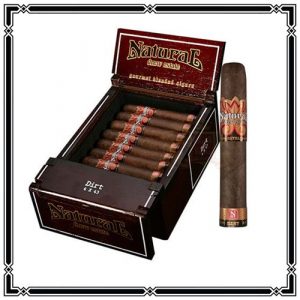
The Natural uses Nicaraguan leaf combined with black tobaccos from St. James Parish, Louisiana; Spain, Italy Syria and Turkey with a flavor that ranges from mild to bold. It is likely to appeal to the younger, more hip smoker. “Natural” means that the cigar only uses naturally blended leaf, without flavoring agents, and with wrappers that range in origin from Haiti to Africa.
Drew Estate Tabak Especial Ltd.
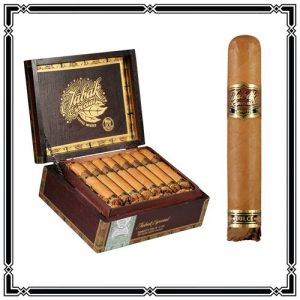
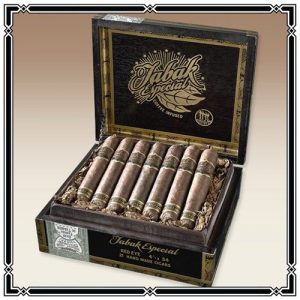
This cigar combines two great traditions, that of blending coffee and blending tobaccos. The leaves are infused with coffees from the mountains of Nicaragua. Two varieties are offered, the Dulce using Connecticut leaf or the Negra (Madura.)
Drew Estate Muwat Kentucky Fire Cured
No, it doesn’t taste like friend chicken, despite the KFC moniker. The process is actually two centuries old and produces something that might be compared to the peaty flavor that a single malt whiskey acquires from hickory, oak or maple wood roasting.
Drew Estate Nica Rustica
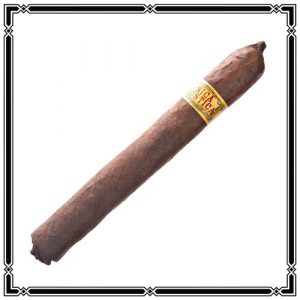
The Nica Rustica is blended with Nicaraguan leaf from Esteli and Jalapa, wrapped with Connecticut Broadleaf; providing a smoke that is bold and delicious, sweet and spicy.